
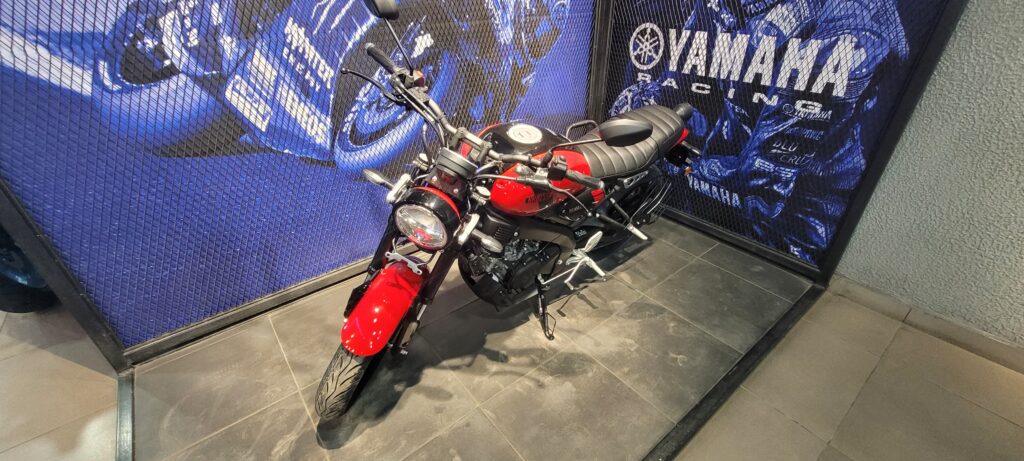
Finally, the elder gods of the Yamaha universe have yielded to the prayers of the Indian bikers’ community. After 5 years of wait Yamaha has launched the XSR 155 on 11th November 2025. Here is the XSR 155 review you have all been waiting for.
Nature of the Bike
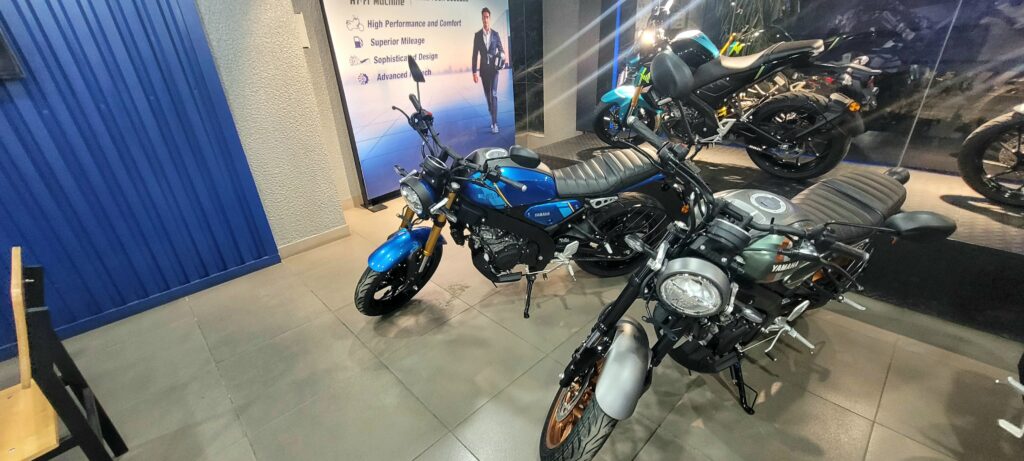
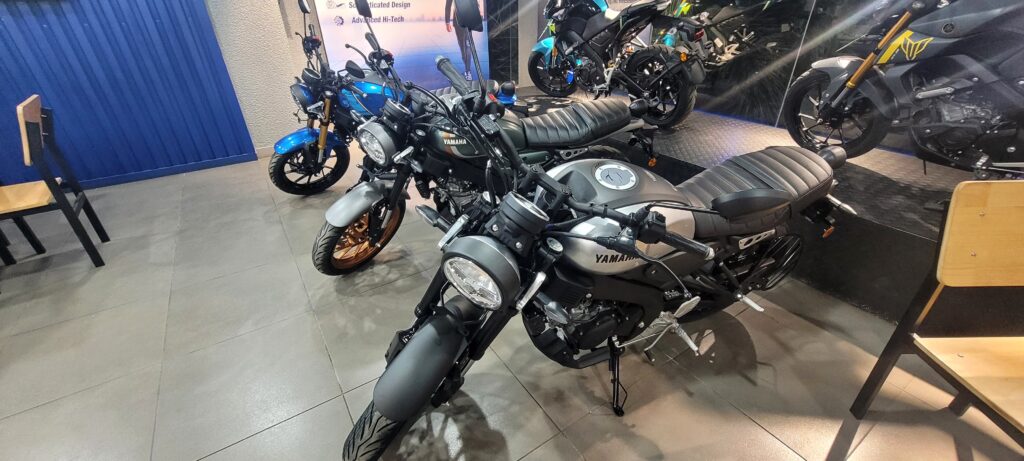
The XSR comes under the cruiser category with an upright seating position and a flat rear seat, more like a cafe racer with retro styling in DNA. Unlike the MTs and R15s, Yamaha has kept the riding stance of the XSR less aggressive for a relaxed ride in the city as well as on highways.
Engine Specifications
| Displacement | 155 cc |
| No of cylinders | Single cylinder SOHC |
| Max power | 18.1 bhp @ 10k rpm |
| Max torque | 14.1 Nm @ 7.5k rpm |
| Gearbox | 6 speed slipper clutch |
| Cooling | Liquid cooled setup |
| Fuel tank | 10 litres capacity |
Yamaha has equipped the XSR 155 with the same proven heart from the R15, featuring VVA technology to balance performance and efficiency in a small-capacity engine.
While this makes it a practical and refined option, the bike feels more like a budget tourer and appears underpowered when compared to rivals such as the Honda CB350 range and the RE Hunter 350.
This has left many loyal Yamaha fans – who have waited nearly five years for its arrival – wondering if the brand could have pushed the envelope further. A 250 cc engine, for instance, might have created a far bigger impact in a market that is increasingly driven by power and performance expectations.
Checkout the Yamaha XSR 155 vs Hunter 350 comparison.
Yamaha has only kept the Indian youth hungry for performance throughout their youth period, like me, who is still waiting for the launch of R25 right from my college days, and now I am 32 years old, and still the R25 is yet to reach the Indian shores from Indonesia.
Features of the XSR 155
| Frame set | Delta box frame |
| Front suspension | USD forks non-adjustable |
| Rear suspension | Mono-shock linked with swingarm adjustable at preload |
| Lighting | LED setup with DRL no projectors |
| Console | LCD display with Bluetooth Y connect |
| Kerb weight | 137 kg |
| Seat height | 810 mm |
| Ground clearance | 120 mm in Yamaha website, but in reality it’s 170 mm (checked in the showroom with the demo bike) |
| Quick shifter | No |
| Fuel capacity | 10 Litres |
| Brakes | Dual channel ABS non-switchable |
For full specs, you may visit the Yamaha XSR 155 specifications page.
With the price tag of 1.51 lakh ex-showroom, XSR 155 is not a feature-rich bike. Yamaha has not placed it as a VFM product. With the competition offering many more features and performance at a reasonable price tag, Yamaha should have at least included the quick shifter from the Yamaha R15 V4 or even given an adjustable suspension setup.
Riding Experience
After test riding the XSR 155 at the Yamaha Chrompet showroom, it’s clear that the bike feels lively on the road. With a 137 kg kerb weight and 14.2 Nm of torque, the power-to-weight ratio is impressive, giving the motorcycle a quick and responsive character. True to typical Yamaha DNA, power delivery feels crisp, with the VVA technology helping the engine pull eagerly through the rev range.
The motor is rev-happy, braking performance inspires confidence with a strong initial bite, and the ABS intervenes quickly and smoothly during hard stops. In terms of ergonomics, the riding dynamics are comfortable, allowing for a relaxed posture with no noticeable back or wrist strain even over longer stretches.
Positives of Yamaha XSR 155
- Engine refinement is leagues ahead with the single cylinder SOHC motor, it revs madly till 10 k rpm, and the vibrations are well contained. Vibrations are not felt much in the handlebars or the foot pegs, typical Yamaha master class in play.
- Driving ergonomics is extremely good since the seating position is upright, and the light weight of the bike makes it nimble in city traffic and for weekend highway rides as well.
- Gearbox is slick with gears that match well, no false neutral or gear slip headache. The Japanese butterbox or Gearbox lives up to its reputation from R15s to MTs.
- Mileage claim by Arai is 45 kmpl, and in real world can expect 40 kmpl average in city traffic. Since it’s already proven with R15s and MT15s. XSR is pocket-friendly for students from a mileage perspective.
- Service and maintenance are economical, with average maintenance at 6k to 7k kms. Availability of spares and their prices are reasonable thanks to Yamaha’s pan-India service networks and inventories. Maintaining this bike is simple and less complicated, as the engine has a solid reputation for never breaking down.
- The headlight is quite good in terms of visibility, with all LED setup, it lights the road well.
- 17-inch tyres at the rear and front offer a decent grip on smooth roads and also, on braking at speeds above 60 kmh; the bite is decent enough to boost the confidence of the rider.
Negatives of Yamaha XSR 155
- Suspension setup is on the harder side for an upright seating position. Especially on rugged roads with potholes, one can feel the stiffness of the bike since Yamaha has posted the XSR as a retro cafe racer, which should have given it a softer note on the suspension side.
- Pillion comfort is not so good, though the rear seat is a straight bench-type setup. The foam padding is adequate, and the narrow bench seat makes it uncomfortable for the pillion during long drive but for city drives it’s good.
- The “Achilles heel” of the XSR 155 is its own coolant storage plastic tank placed under the engine belly of the bike. Again, why Yamaha, why? In Indian roads filled with potholes, there are chances of the coolant tank getting damaged by rocks or stones and by speed breakers. Even though there is a plastic engine guard that covers the coolant tank, it is prone to quick wear and tear.
- The ground clearance is 170 mm, but with the pillion, it can go up to 120 mm, which can scrape the engine belly on speed bumps and damage the coolant tank. It could have been better if the ground clearance is 190 mm.
- Not a value-for-money product, Yamaha has overpriced the XSR 155, with the competition offering more performance and features in the same price band.
- Build quality in certain areas is not pleasing compared to MT15s and R15s. Especially the radiator to engine waterpump hoses are exposed, unlike in MT15, where they’re fully tucked and insulated well.
- The handle bar is placed a little bit down and also not wide enough, which makes tall riders bend forward in an awkward way. The only solution is to go for aftermarket handlebar risers.
At the end of the day, it’s the MM (Mileage and Maintenance) factor that drives an Indian buyer. The brand Yamaha as a whole is renowned for its performance and reliability throughout the globe, but for India, Yamaha is a silent player with less attractive choices compared with competition like Bajaj, KTM, TVS and REs, who focus more on the performance band of the market, catering to the needs of the Indian motor heads.
It’s your choice, my reader, as this is just a pit stop for knowledge on the motorcycle.
Special thanks to Mrs Angel of the Yamaha showroom in Chrompet for giving the XSR 155.