
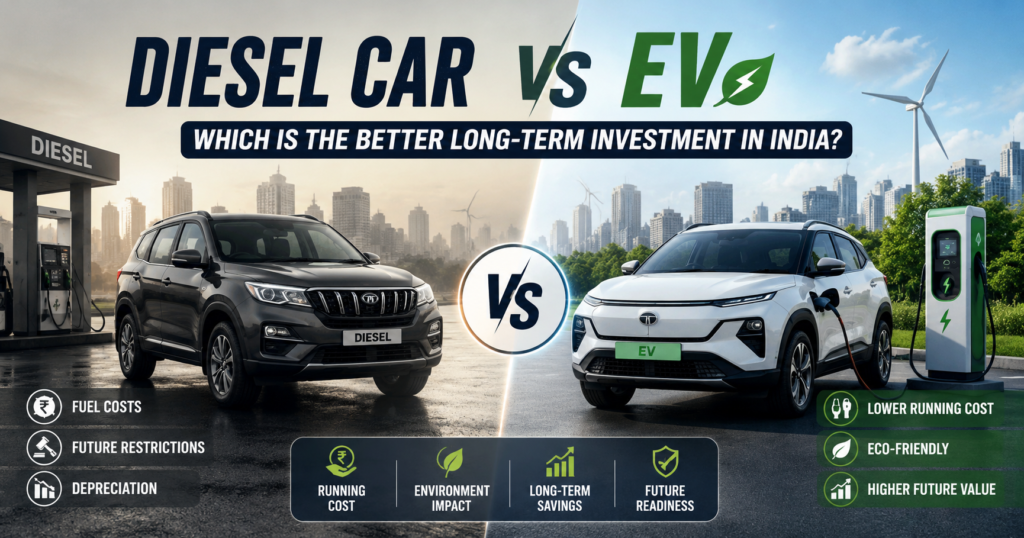
Why This Decision Matters More Than Ever?
Buying a car in India today is about much more than comparing fuel efficiency or performance. With stricter emissions norms, growing discussions around restricting diesel vehicles in certain regions, and the rapid adoption of electric vehicles (EVs), buyers must also consider how future regulations and market trends could affect their ownership experience. A vehicle is a long-term investment, and choosing the right one has become more important than ever.
While diesel cars continue to attract buyers with their excellent highway fuel economy and long-distance capabilities, EVs are gaining momentum thanks to lower running costs, expanding charging infrastructure, and government incentives. At the same time, concerns over the long-term future of diesel vehicles have left many buyers wondering which option offers better value over the years. In this article, we’ll compare diesel cars and EVs across ownership costs, maintenance, resale value, practicality, and future prospects to help you make an informed decision.
Who Should Read This Guide?
- Buyers planning to keep a car for 7–10 years.
- High-mileage drivers.
- Buyers considering both diesel and EVs.
Diesel Car vs EV: A Quick Comparison
Choosing between a diesel car and an electric vehicle (EV) depends on how you drive, your budget, and your long-term plans. Diesel cars are known for their fuel efficiency on highways and long-distance travel, while EVs offer lower running costs, quieter driving, and zero tailpipe emissions. As governments encourage cleaner mobility and charging infrastructure expands, EVs are becoming an increasingly practical option for many buyers. However, diesel still has advantages for certain use cases.
Upfront Cost: Which One Costs More to Buy?
In most cases, EVs have a higher purchase price than comparable diesel cars due to the cost of battery technology. However, government incentives, tax benefits, and manufacturer discounts can help reduce the price gap in some regions. Diesel vehicles generally remain more affordable at the time of purchase, making them attractive to buyers with a limited upfront budget.
Running Costs Over the Long Term
While diesel cars usually cost less to buy, they often have higher long-term running expenses. Fuel prices, regular servicing, engine maintenance, and emissions-related components can increase ownership costs over time. EVs, on the other hand, typically cost less to charge than it costs to fill a diesel tank and have fewer moving parts, resulting in lower maintenance expenses. For drivers covering high annual mileage, these savings can become significant.
Will Future Diesel Restrictions Affect Owners?
Many cities and countries are introducing stricter emission standards and planning restrictions on diesel vehicles to improve air quality. While existing diesel cars are unlikely to become unusable overnight, owners may face low-emission zones, higher taxes, or reduced demand in the used car market over time. Buyers planning to keep a diesel vehicle for many years should consider how future regulations could affect ownership costs and convenience.
Resale Value: Which Car Is Likely to Hold Its Value Better?
Resale value depends on market demand, vehicle condition, and local regulations. Diesel cars have traditionally retained value well because of their fuel efficiency, but demand has weakened in many markets due to stricter emissions policies. EV resale values have been affected by rapid improvements in battery technology and price reductions on new models. Over time, resale trends will likely depend on charging infrastructure, battery health, and consumer confidence in EVs.
Infrastructure: Fuel Pumps vs Charging Network
Diesel vehicles benefit from an extensive network of fuel stations, making long-distance travel convenient with quick refueling times. EV charging infrastructure is expanding rapidly, but availability and charging speed still vary by location. Home charging offers unmatched convenience for many EV owners, though people living in apartments or areas with limited charging access may find diesel vehicles easier to own.
Who Should Still Consider a Diesel Car?
A diesel car may still be the better choice if you:
- Frequently drive long highway distances.
- Travel to remote areas where charging stations are limited.
- Need strong towing capability or regularly carry heavy loads.
- Want lower upfront purchase costs.
- Cover high annual mileage where diesel fuel efficiency remains beneficial.
Who Is Better Off Buying an EV?
An EV is likely the better option if you:
- Mainly drive in cities or suburbs.
- Have access to home or workplace charging.
- Want lower fuel and maintenance costs.
- Prefer a quieter and smoother driving experience.
- Plan to reduce your environmental impact and avoid future emissions restrictions.
What If You Plan to Keep the Car for 10 Years?
If you expect to own your vehicle for a decade, it’s important to look beyond the purchase price. An EV’s higher upfront cost may be offset by lower charging and maintenance expenses over the years. It may also be better positioned as governments continue supporting cleaner transportation. However, battery warranty, long-term battery health, charging availability, and replacement costs should be considered.
For diesel owners, long-term reliability can still be excellent with proper maintenance, but future emissions regulations, fuel prices, and declining resale demand could affect the total cost of ownership. The best choice ultimately depends on your driving habits, access to charging, and the regulations in your region.
Final Verdict: Diesel or EV- Which Is the Better Long-Term Investment?
| If you… | Consider.. |
| Drive 25,000+ km/year, mostly highways | Diesel (if it fits your region and usage) |
| Drive mostly in the city and can charge at home | EV |
| Plan to keep the car for 10+ years | Discuss the trade-offs, including policy uncertainty and total cost of ownership |
| Live in an apartment without charging | Explain whether public charging makes an EV practical |